Reflections from the Passover Seder
Memory, Resistance, and the Stranger’s Soul

Another Jewish holiday comes around, and I feel a ping in my heart. How can we celebrate Judaism in a time of genocide? When Palestinians are still being mass murdered, and the crimes of Israel and the U.S. continue to plague the world through Lebanon and Iran, the level of ongoing destruction—of sacred lands and people—is unfathomable.
Some might argue that there is no point in Passover: what does freedom mean in the age of vicious empire? But for me, rooting in a tradition of liberation has never felt more necessary.
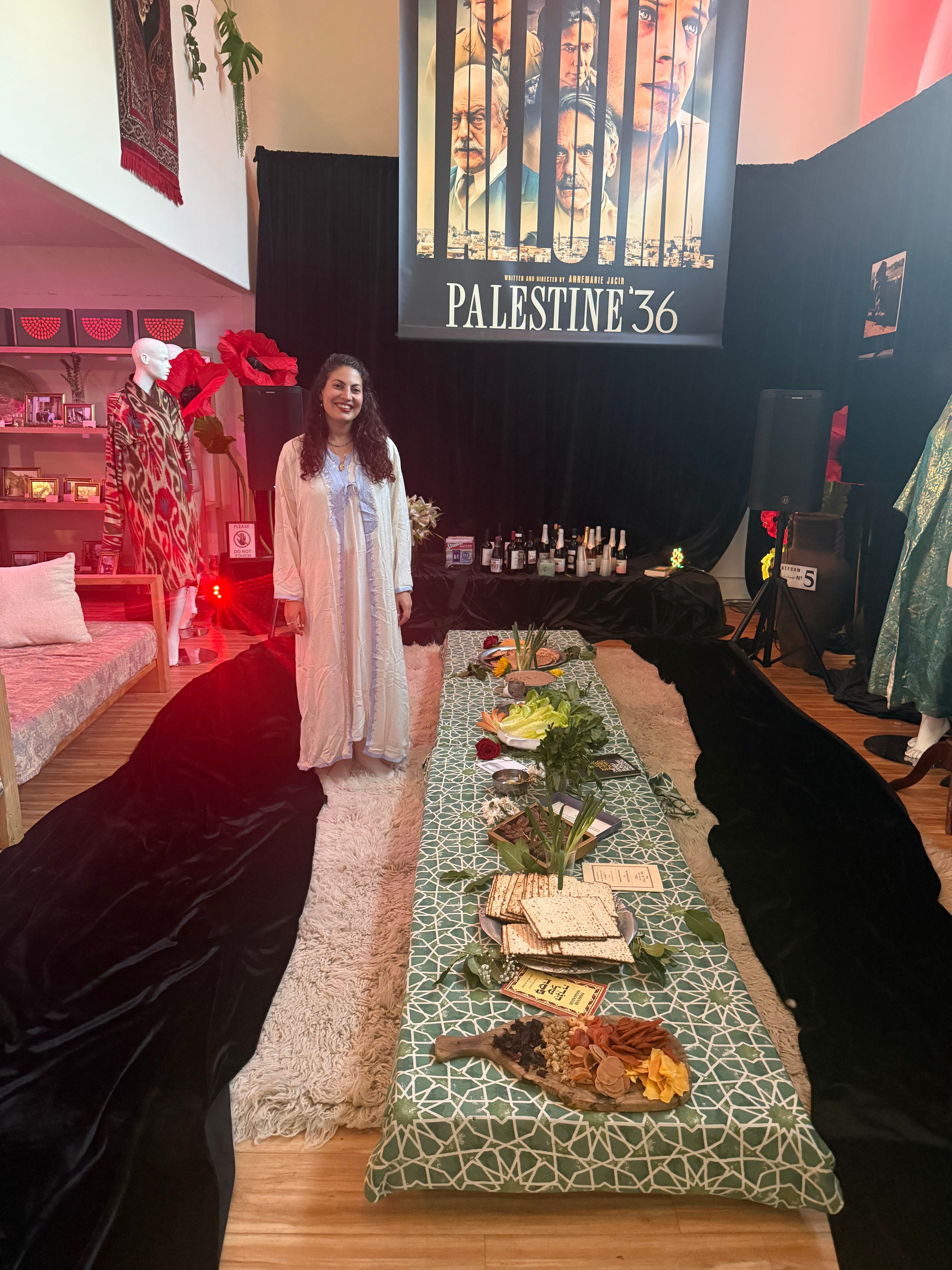
This year, I had the honor of leading a special Seder at a beautiful community center in Los Angeles named Astralab. Situated in the iconic Granada Buildings, this space revives the spirit of connection, bringing people together spiritually, politically, and culturally. (They are currently facing eviction because of their political activity around Palestine—please consider signing this petition to support them.)
In our Seder, we sat inside a living archive of 1930s Palestine—an immersive exhibit by Watermelon Pictures, rooted in the story of Palestine ‘36, a powerful film that honors a legacy of resistance, resilience, and collective struggle. It highlights the longest anti-colonial uprising in the history of the British Empire.
For me personally, this was incredibly touching. I come from a long line of Jews who lived in Palestine, in the holy city of Jerusalem. Jewish holidays were celebrated with the larger community, as Salim Tamari writes in Ishaq al-Shami and the Predicament of the Arab Jew in Palestine:
“Jawhariyyeh, who lived in Mahallat al-Sa’diyyeh in the Old City and wrote in approximately the same period, recalls considerable socializing, cultural activities, commercial partnerships, and even political alliances between Muslims, Jews, and Christians….This is especially noticeable in his rendition of Passover ceremonials:
The beautiful custom of exchanging gifts between Jewish and Moslem families on the last day of Passover has been preserved to this day. Arabs sent their Jewish friends a siniyah - a round copper bowl - laden with fresh bread, goats’ butter and honey. The Jews returned the siniyah by the same messenger, with matzot and home-made jam. My family maintains this old tradition to this day.”
Today, this world seems foreign, lost, destroyed in the propaganda machine that ripped Judaism from its context in the Levant and usurped it into the settler-colonial movement of Zionism.
Zionism ruptured the landscape of belonging for Jews in the region and constructed a narrative of “conflict between Arabs and Jews,” through which Jews who were Arab were erased. Even more, the actual Jewish history rooted in Palestine was largely obscured. I am currently reading a classic work on Maimonides, in which the scholar repeatedly references Palestinian rabbis and refers to the land as Palestine. Academic Jewish scholars have no difficulty naming the land as Palestine, yet politically, this acknowledgment remains somehow controversial.
The idea that Palestine and Judaism are separate is a myth. Judaism has always been part of the history of Palestine, and denying that history is to participate in the Jewish-supremacist framework of the Israeli state. Of course, Judaism has been co-opted and used by the regime to justify acts of brutal violence against Palestinians. So much so that celebrating Passover in solidarity with Palestinian liberation can be seen as an act of resistance—or even as “outside” the tradition. Yet I would argue that the very tradition of Passover calls us to fight for the liberation of Palestine. After all, it is a holiday about freedom from oppression.
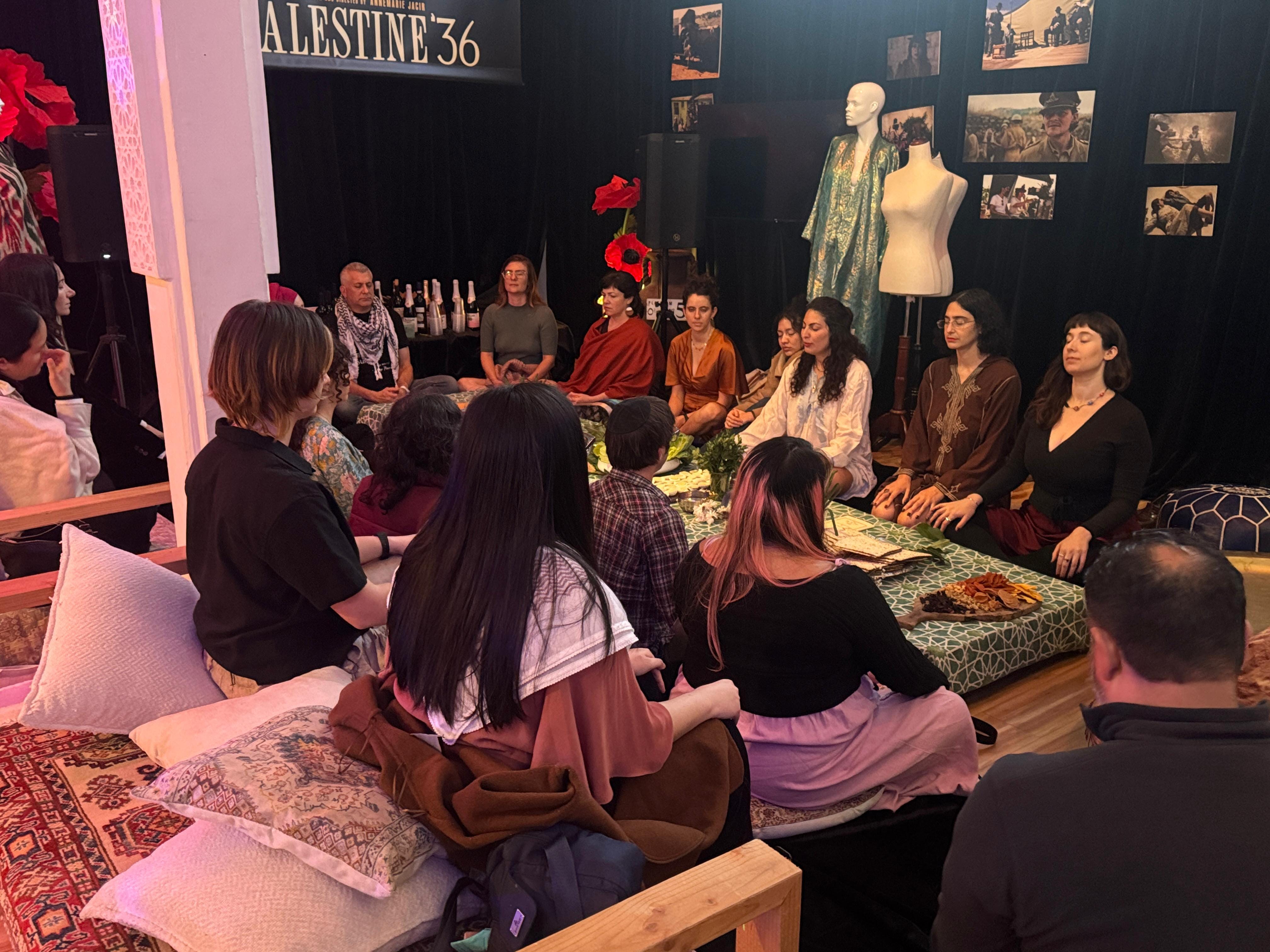
Passover takes place on the full moon of Aries—a new year that comes with fire. It asks us to begin anew with fresh energy, like the fire horse charging into unknown terrain. This year, I have been reflecting on parallels in other traditions—Nowruz, the Last Supper, and even Ancient Greek tradition—where communities would gather for a ritual dinner and share words of wisdom.
I have been teaching weekly Hebrew Bible class for the last two years, and recently we began the book of Exodus—learning about Moses, the plagues, and what it means to move from oppression to liberation. One theme that emerges is the duality between human power, embodied by Pharaoh and oppression, and the power of God, liberating the Israelites from slavery and guiding them toward the unknown terrain of freedom.
One question I posed at our Seder was: “What power is greater than the power of oppression?” To me, it is critical that we answer this question and root ourselves in a power larger than the system. Otherwise, our actions and responses remain confined within the system, inadvertently perpetuating its mechanisms. I have been reflecting on how we fuel, knowingly and unknowingly, the power of Pharaoh—these systems of oppression and violence. What does it mean to divest from them, not just materially but psychologically? How do we unbind the chains that tether us to systems that destroy life?
Passover calls us to confront what is it that we worship: Do we bow to false idols that perpetuate oppression, or do we dedicate ourselves to life, creation, and the Divine? It reminds us that we are not trapped in cycles of domination, but invited to participate in the greater flow of Divine creation.
The book of Genesis focuses on the creation of the world and the personal lineage of Abraham, emphasizing the beginnings of life and human history. In contrast, Exodus shifts the focus to society and collective oppression. In Jewish mystical thought, there is the concept of Hastarah—the concealing of God’s light—which suggests that as creation unfolded, God’s presence became more distant, allowing injustice and oppression to take root. In our classes, we have explored how this movement from creation to oppression signals that something has gone wrong in the world. Divine intervention is therefore required to restore alignment with the original purpose of creation. This is the miracle of this time—the Hebrew month of Nisan, whose name comes from the word Nes, meaning “miracle.”
The purpose of the Passover tradition is enacted through a ritual meal: the Seder. At its core, the Seder is about telling the story of Exodus. Passover is concerned more with the act of storytelling than the story itself. It is not only about content or knowledge, but about the ritual of remembering and sharing, which keeps us connected to our history, our people, and the purpose of freedom. Even if you already know the story, you are obligated to tell it—not for its content, but for the act of storytelling itself. There is something vital about sitting together and sharing the stories of our ancestors. It is a ritual of remembrance of who we are and where we come from. Most importantly, it calls us to remember that we were once strangers in the land of Egypt. It is in this identity of the stranger that our tradition takes root.
“There are many places where the Holy Blessed One reminds the people of the holy seed to be careful of the way they treat strangers. But there is one place where the hidden word emerges from its case, but upon being exposed it immediately returns to its case and is covered there. After warning to care for the stranger in all those other places, the word emerges from its case and is revealed in the verse: “... you know the stranger’s soul…” (Exodus 23:9) But then, it immediately returns to its case, covers itself in its garments and is hidden in the words “... for you were strangers in the land of Egypt.” The verse thinks that because it immediately covered itself, no one has noticed. Yet we know that it is through the stranger’s soul that the holy soul connects with the matters of this world and is sustained by them.”
Zohar 2:99a
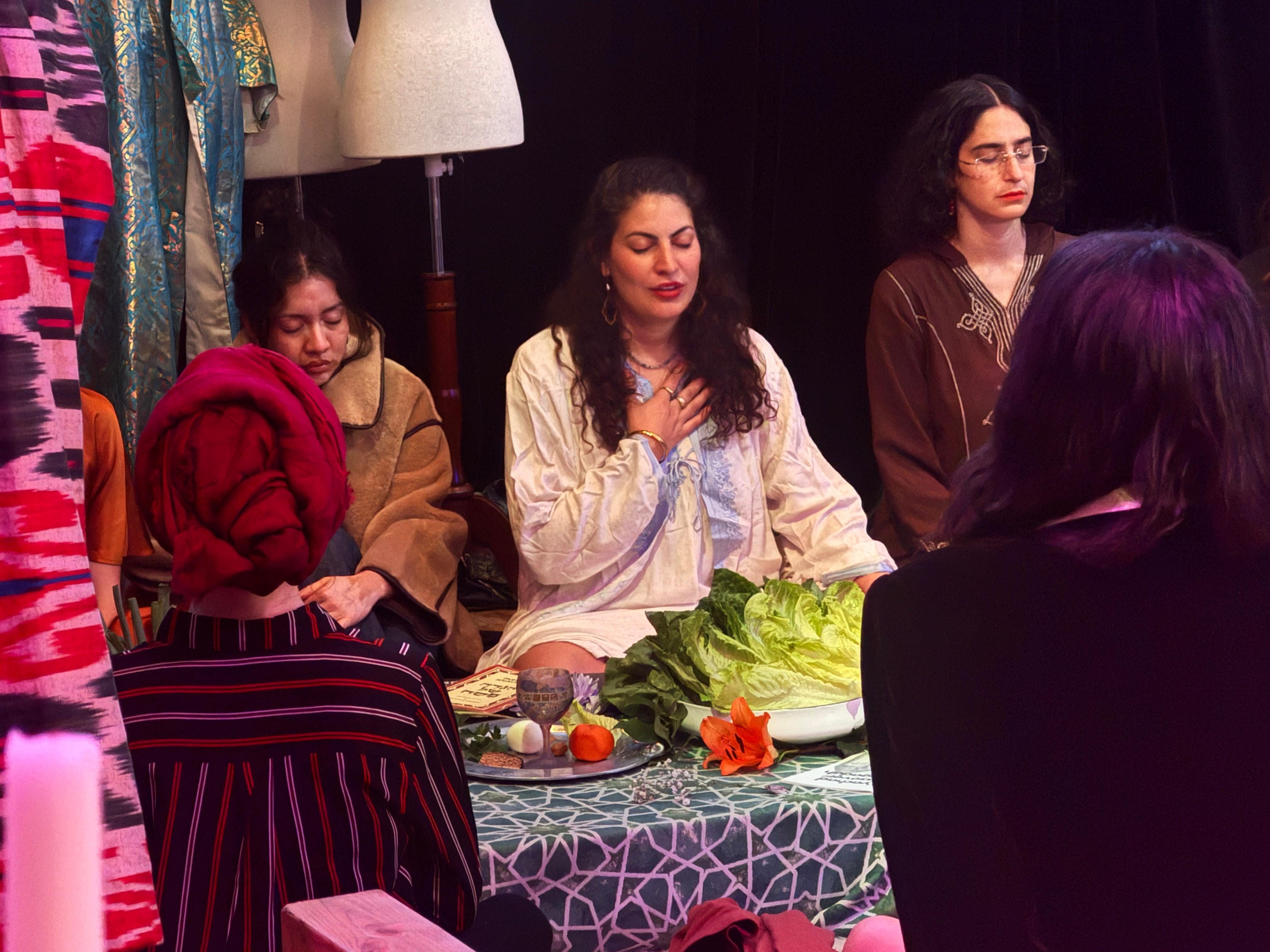
Moses himself struggled with identity. Was he Israelite or Egyptian? He was one of the enslaved, yet he grew up in Pharaoh’s palace. He was privileged, yet his very bones were bound to the suffering of his people. He doubted himself constantly—was he truly the one to answer this prophetic call?
This navigation of in-between identity is central to the story. Is our sense of self defined by social constructs, or is there something deeper? Moses’ experience of revelation at the burning bush—where God calls him to free the people—is especially powerful. It is precisely because of his in-between identity that Moses is uniquely positioned to lead the people toward liberation.
I resonate deeply with the tension of living in an in-between identity—born in Jerusalem to a Jewish family with Palestinian roots is not for the faint of heart. I have constantly had to navigate the pressures of belonging and what it means to respond to both the political and spiritual call of freedom.
Judaism teaches that we must embrace strangeness—that it is often from the margins of society, from the outskirts of the mainstream, that liberation flourishes. The Passover story declares: “Let all who are hungry, come eat.” Passover is about opening the ritual dinner table to all who need—not only those who hunger for food, but also those who hunger for wisdom and spiritual nourishment. This profound call to welcome everyone—particularly the stranger, the one who does not belong—is at the very heart of Judaism.
It was particularly meaningful to honor Passover in an exhibition of Palestine set in the 1930s—a multi-faith gathering open to people of all identities to share in the story of oppression and liberation. Many came from diverse backgrounds to recount their ancestral experiences of oppression, and together we reflected on what freedom means in our time. This offered a small window into what Passover in Jerusalem could have been before Zionism crushed the land and its people.
Zionists have long co-opted the Passover call of “Next Year in Jerusalem” to serve their oppressive agenda. Yet to fall into that trap, one must misread the entirety of Jewish tradition. Jerusalem is not simply a physical land—it is a spiritual city of God. As Isaiah says, “For My House shall be called a house of prayer for all peoples” (Isaiah 56:7). Emphasis on all people: the city of God is open to every believer. Jerusalem is a prophetic call for spiritual liberation, not political domination—a vision of freedom for the whole world.
Passover calls us to act, to witness, and to ensure that liberation is not just a memory, but a living responsibility. I will continue to say, “Next year in Jerusalem,” but for me, the call is clear: next year in a liberated Jerusalem, in a Free Palestine. May we move together from oppression to liberation—for all peoples.
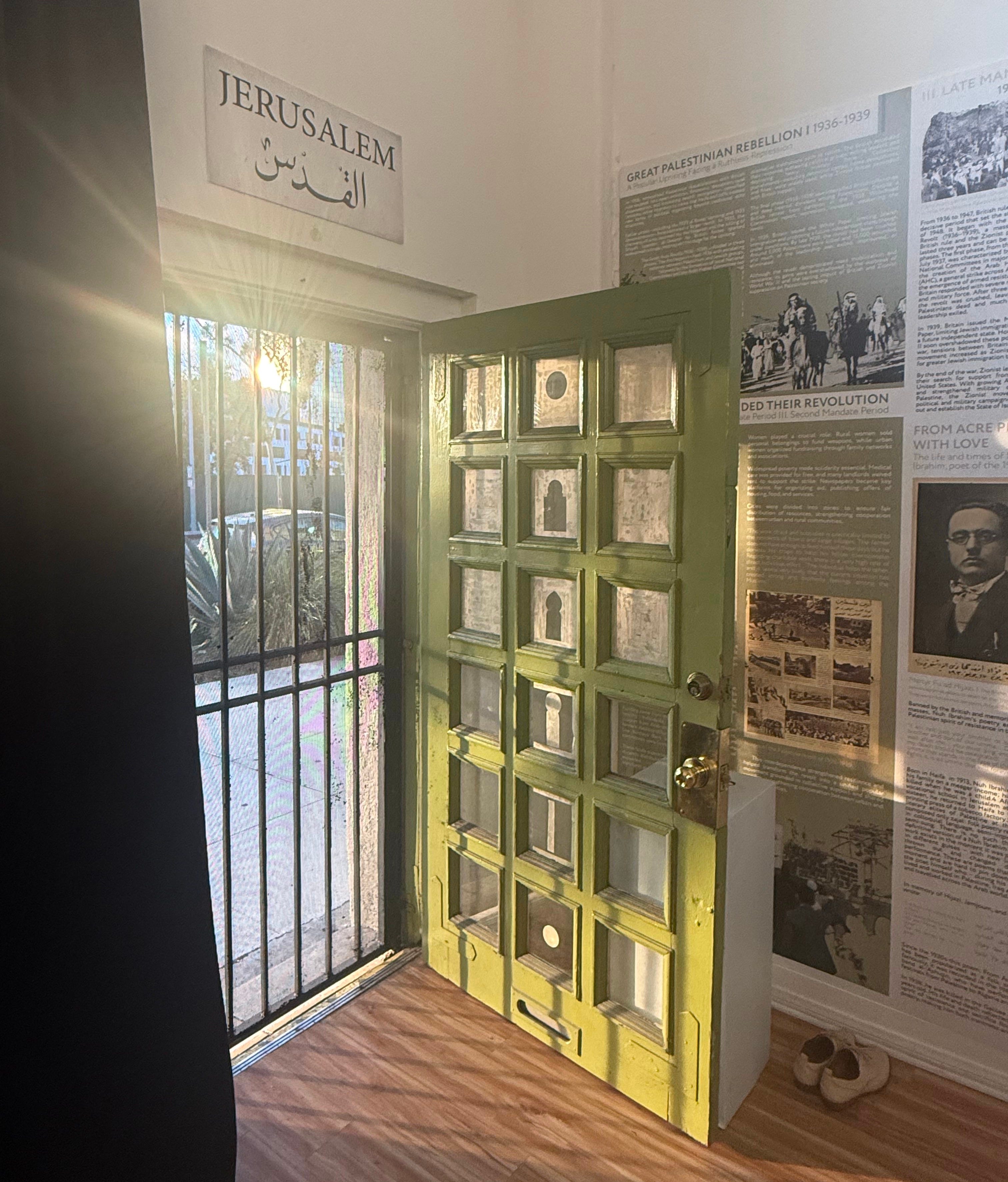
“Blessed are the strangers” as the Prophet Muhammad said ❤️🩹🍉 a beautiful reflection on what Passover means
This is beautiful witness and medicine. Thank you, Hadar.